Thursday, April 17, 2014

Memory


Oddly, two books that I am currently reading are on the same topic.  (I usually have one fiction and one non-fiction book at the same time so I can have some variety.)

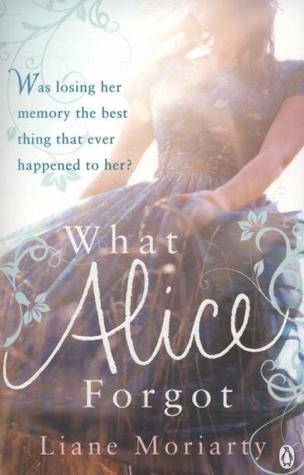
"What Alice Forgot" by Liane Moriarty is the fiction choice from my book club. While it does have some heavy topics like divorce and memory loss, it is superbly written.

 What Alice Forgot

My non-fiction choice?  "The Answer to the Riddle is Me" is written by David Stuart MacLean, as a memoir of his amnesia.  Why oh why these two books, right now, at this time???


I have no answers.....I'm just enjoying both books.


Wednesday, April 16, 2014

Island Prescriptions

Island prescriptions for a restful sleep and productive day:

Alarm clock:  bird song
Sleeping aid:  fresh air
Breakfast:  organic eggs and berries
Exercise/gym:  a walk to and along the shore
Commute:  to my kitchen
Work:   weaving a basket

It translates rather well, I think.


 So there are artificial ways to be awakened by birds, I learn...I just happen to have the real thing!

Tuesday, April 15, 2014

100 Amazing Books to Read in a Lifetime

When I stumbled upon Stumbleupon, I had no idea what a gift it could be.  They recently shared "100 Amazing Books to Read in a Lifetime".  http://www.stumbleupon.com/su/6Hh8tV# 

Their list (below) is excellent, although I'm disappointed in two areas.  First, I've read all but 3 on the list (I was hoping for some wonderful new books I had not yet read).  Second, two of my favorites are not on the list:  Egalia's Daughters by Gert Brantenberg by  and Special Topics in Calamity Physics by Marisha Pessl.  But it is definitely a list of books worth re-reading.  The books, not the list.

Here are the top 100 books on their list:

Monday, April 14, 2014

Salish Sea

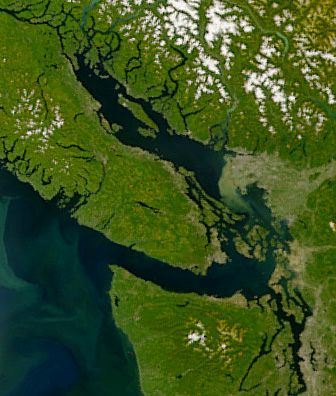
I was reading something yesterday that referred to Lopez Island as being in the Salish Sea. Finding that extremely intriguing, of course some research ensued.  Part of what I discovered is shown below.  It just seems right to name it after the indigenous people, rather than various explorers.  Since I was raised in Gig Harbor, you might say I've always lived by the Salish Sea.  No wonder it feels like home on the island!

http://en.wikipedia.org/wiki/Salish_Sea
The Salish Sea includes the Strait of Juan de Fuca, the Strait of Georgia, Puget Sound, and all their connecting channels and adjoining waters, such as Haro Strait, Rosario Strait, Bellingham Bay, Hood Canal, and the waters around and between the San Juan Islands in the U.S. state of Washington and the Gulf Islands in British Columbia, Canada.

Origin of the term[edit]

The first known use of the term Salish Sea was in 1988, when marine biologist Bert Webber from Bellingham, Washington, created the name for the combined waters in the region with the intention to complement the names Georgia Strait, Puget Sound, and Strait of Juan de Fuca, not replace them.[3] The adoption of the term, he said, would raise consciousness about taking care of the region's waters and ecosystems. Webber's efforts are credited with the official recognition of the term in Canada and the U.S.

Coast Salish peoples[edit]

The Coast Salish are the indigenous peoples who live in southwest British Columbia and northwest Washington state along the Salish Sea and share a common linguistic and cultural origin. The Coast Salish are seen as one of the main cultural and linguistic branches of a larger group known as Salishan or Salish. There are five recognized divisions of the Salish language family, with Coast Salish and Interior Salish being the primary two. The Salish family consists of 23 separate languages.[4] European and American explorers first encountered Salishan people along the Pacific Northwest coast in the late 18th century. The first detailed information was obtained by the Lewis and Clark Expedition of 1804-1806.[5] The term "Salish" was originally applied only to the Interior Salish Flathead tribe living in the region of Flathead Lake, Montana.[5][6] By the mid-20th century it had been extended to cover all people speaking a similar language.[7] The Flathead Nation continues to refer to their language and culture as Salish.[8][9] A variant name for Flathead Lake is "Selish Lake".[10] The name Salish Sea was coined only in the late 20th century. There is no overarching title for this area or even a commonly shared name for any of the waterbodies in any of the Coast Salish languages.
The waterways of the Salish Sea were important trade routes for the Coast Salish and they remain a source of food and other resources for the indigenous peoples. The basin includes territory of the Northern Wakashan Kwakwaka'wakw and Southern Wakashanpeoples (the Nuu-chah-nulth, Makah, and Ditidaht) and, formerly, that of the Chimakum (a Chimakuan people related to the Quileute who no longer exist as recognizable group, having been wiped out by the Suquamish and others in the 19th century).[11]
File:PNW-straits.jpg

Sunday, April 13, 2014

Slower & Simpler - Never Compare

Most of my unrest or dis-ease in my life is due to comparing myself to others, or how I used to be at age 30, or perfection.  An insightful article on the subject may be found at http://bemorewithless.com/comparefair/?utm_source=feedburner&utm_medium=email&utm_campaign=Feed%3A+BeMoreWithLess+%28Be+More+with+Less%29.

But this picture says it all:


nevercompare

Saturday, April 12, 2014

A Way With Words

For anyone trying to learn English (and I am so very thankful that it's my native language), the idioms and idiosyncrasies make it so difficult.  However, it is also fascinating to study this ever-changing tongue and how usage changes over time.

There is an NPR program called "A Way With Words" (http://waywordradio.org./) that is wonderful.  It's one of the few podcasts that I download and listen to regularly.

It also makes me realize that my interest in words and their roots is a mere hobby, compared to the intense and often all-consuming interest it holds for others.  I dabble, they are consumed.


A Way with Words

A public radio program about language examined through history, culture, and family.


Friday, April 11, 2014

Freedom To Be An Artist

There are so very many choices of what I could do today - what an awesome life this is.  A deer is munching her way through my front yard.  The hummingbirds are already fighting over the feeder and it is barely light.  And I'm prioritizing my day, wading through the myriad of options and projects confronting me.

I think today will be driftwood preparation (sanding, varnishing, drilling) outside on the deck, weaving on a random weave cedar basket that seems never-ending (I always see more to do on it no matter how much more I work on it), and then into the village for training to work at the gallery.  But before any of that, I think a walk may be in order, down by the water that looks like it is still as glass.

After a life-time of working in the corporate world, even though I've been retired for a few years now, I still relish my freedom to be an artist, work for myself, and be able to plan my own schedule and work day.  These are the gifts of my island artist life:  appreciation for what I have and an inspiring place in which to work.  Not quite sure that I am deserving of this blessed life, but I will NOT take it for granted.